| Topic | What is supported | Planning use |
|---|---|---|
| Sleep | Conclusive studies showing that chamomile helps sleep are lacking. | Treat the cup as a calming evening ritual, not a sleep treatment. Persistent sleeplessness belongs with a clinician. |
| Wider health claims | Chamomile has not been widely studied in humans, and the evidence is not enough to support health claims. | Judge the tea by taste and routine, not by promised outcomes. |
| Calories | About 2 calories per 8-ounce cup without additions. | Plain chamomile adds almost nothing to a day’s intake. Sweeteners and milk change that. |
| Brewing strength | Traditional preparation uses 150 mL boiling water over 3 g chamomile flowers. | Use this ratio as the baseline and adjust to taste. |
| Steeping | Keep the cup covered for 5-10 minutes, then strain. | Cover the cup and set a timer. Shorter gives a lighter cup, longer a stronger one. |
| Frequency | The traditional preparation can be used 3 or 4 times daily, though one use is often sufficient. | Start with a single cup and add more only if you want them. |
The figures above come from MedicineNet’s guide to drinking chamomile tea daily and a nutrition overview of chamomile tea.
Chamomile tea benefits are modest and best judged as a calming, calorie-light daily drink, because human research on chamomile is limited. Brew it covered, check for daisy-family allergy first, and treat sleep claims with caution.
This guide sits within plant based wellness, where herbal teas are one of the gentlest entry points. The sections below cover what a cup can reasonably be expected to do, how to drink it day to day, how to brew it, and who should be careful.
What a cup of chamomile tea can realistically offer
Chamomile is popular, but the human evidence behind it is thinner than its reputation. MedicineNet notes that chamomile has not been widely studied in humans and that there is not enough evidence to back specific health claims. The same source says conclusive studies supporting the idea that chamomile helps you sleep are lacking.
That has practical consequences for how the tea is best used.
- Expect a ritual, not a remedy. A warm, unhurried cup in the evening is a reasonable habit. Whatever relaxation follows may come as much from the pause as from the plant, and nothing in the evidence promises more.
- Be wary of anxiety and condition-specific claims. Where labels or articles promise relief for a named problem, the available evidence does not carry that promise. A tea should not replace advice from a doctor or pharmacist for symptoms that matter.
- Choose it for what it is. It suits people who want a plain, flavoured hot drink with almost no calories and who are comfortable with modest expectations. It does not suit anyone hoping for a measurable clinical effect.
Chamomile tea as a daily drink
Chamomile tea is easy to fit into a daily routine because a brewed cup contains about 2 calories per 8-ounce cup when nothing is added. Most of the nutritional difference comes from what goes into the cup afterwards, not from the herb.
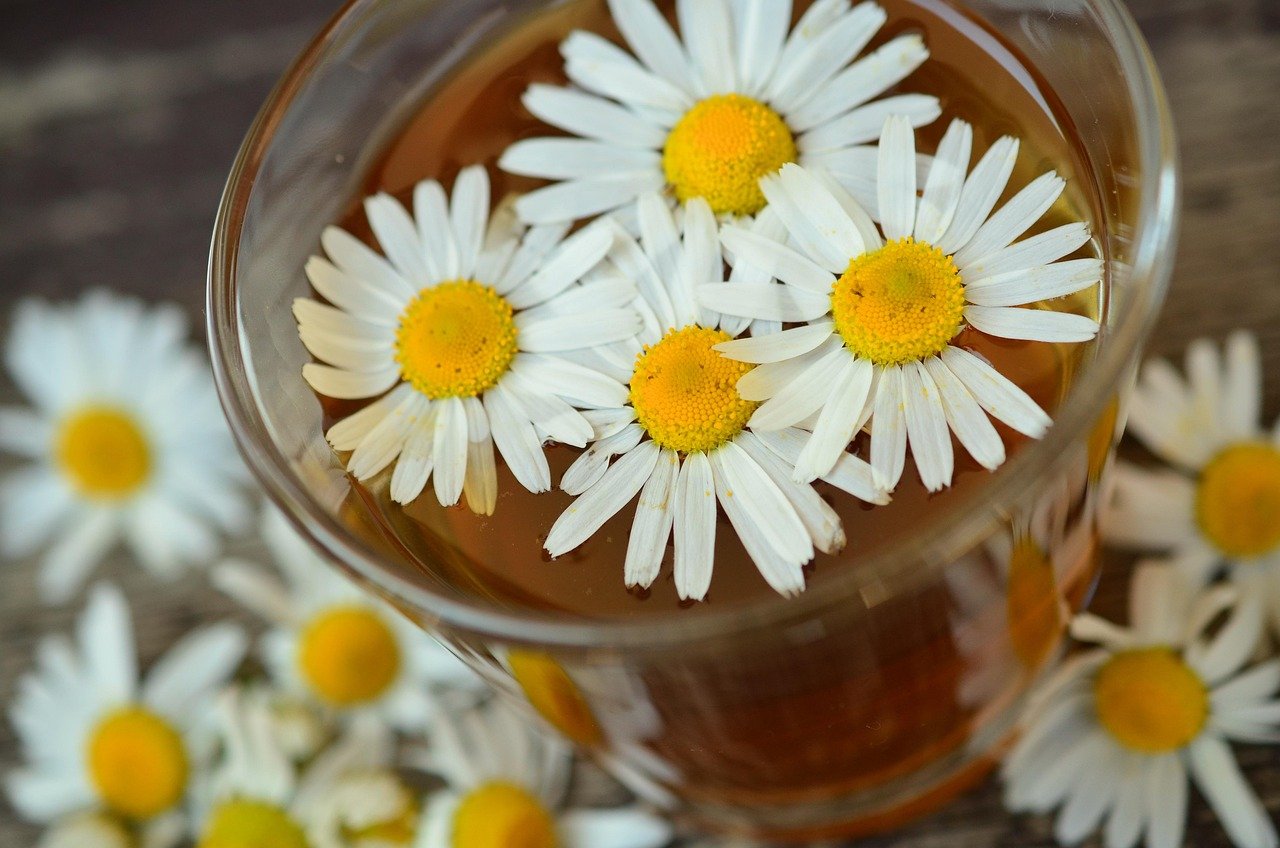
The same nutrition guide says the traditional preparation can be used 3 or 4 times daily, although many people find a single use sufficient. That is a ceiling for the traditional preparation, not a target to aim for. A sensible approach follows from it.
- Begin with one cup. Pick the time of day you would actually enjoy it. If it becomes a habit you like, there is no evidence-based reason to push the number up.
- Keep additions deliberate. Sugar, honey or milk turn a near-zero-calorie drink into something with real calories. Add them for taste, not by default.
- Notice how you respond. If a cup is followed by itching, a rash or other signs of irritation, stop and read the allergy section below before trying again.
How to brew chamomile tea
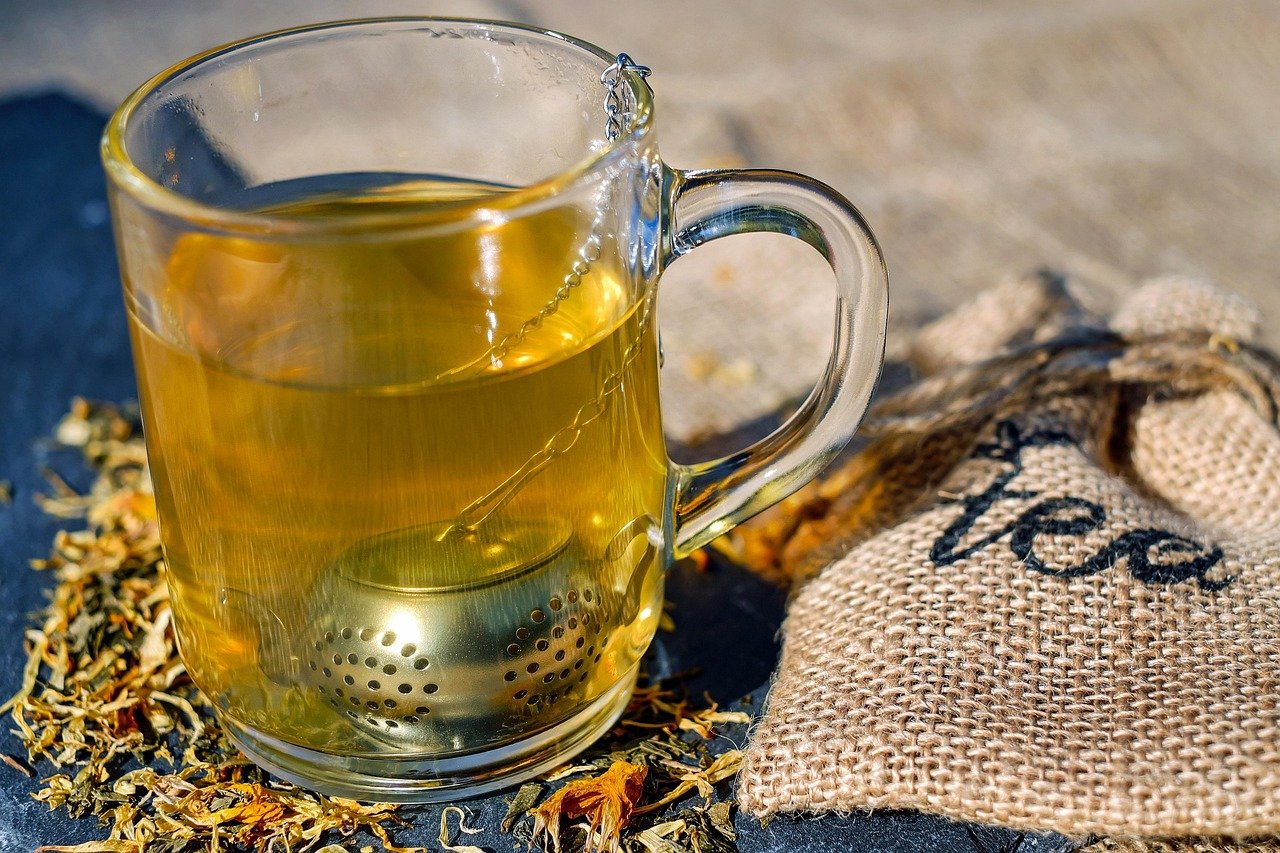
The traditional method described by the nutrition guide pours 150 mL of boiling water over 3 g of chamomile flowers, keeps the tea covered for about 5-10 minutes and then passes it through a strainer. Covering matters because the cup stays hot while the flowers steep, and straining stops the infusion from continuing to strengthen as you drink.
- Weigh the flowers. Measure about 3 g of dried chamomile flowers into a teapot or heatproof cup.
- Pour boiling water. Use 150 mL of boiling water over the flowers.
- Cover the vessel. A saucer or lid is enough.
- Steep for 5-10 minutes. Taste near the shorter end first, since you can always leave it longer next time.
- Strain and drink. Remove the flowers so the tea does not keep stewing.
Prepared tea bags work differently. A bag typically holds 1-2 g of herb, so it carries less plant material than the traditional ratio and gives a milder cup. Loose flowers weighed on a kitchen scale are the way to reproduce the traditional strength. A mesh infuser makes the straining step easy, because the herb lifts out in one move when the timer ends.
Allergy and side-effect cautions
The clearest side-effect concern with chamomile tea is allergic reaction. People who are allergic to plants in the daisy family, such as ragweed and chrysanthemums, are more likely to react to chamomile. The tea is made from the flowers themselves, so the allergen exposure is direct.
For anyone with a ragweed allergy, that changes the decision.
- Do not assume it is safe. A ragweed allergy raises the likelihood of a reaction, so chamomile should not be treated as an ordinary caffeine-free alternative to other herbal teas.
- Ask first. A doctor or allergist can say whether trying chamomile makes sense given your history, particularly if past reactions have been severe.
- Stop at the first sign of a reaction. If a cup is followed by an allergic response, discontinue the tea and seek medical advice instead of retrying.
Medicines and special circumstances call for the same caution. Anyone taking prescription medication, or who is pregnant, should check with a pharmacist or doctor before making chamomile a regular habit. That is a precaution rather than a documented interaction, but it is the sensible order of steps when the research base is this limited.
The plant behind the tea
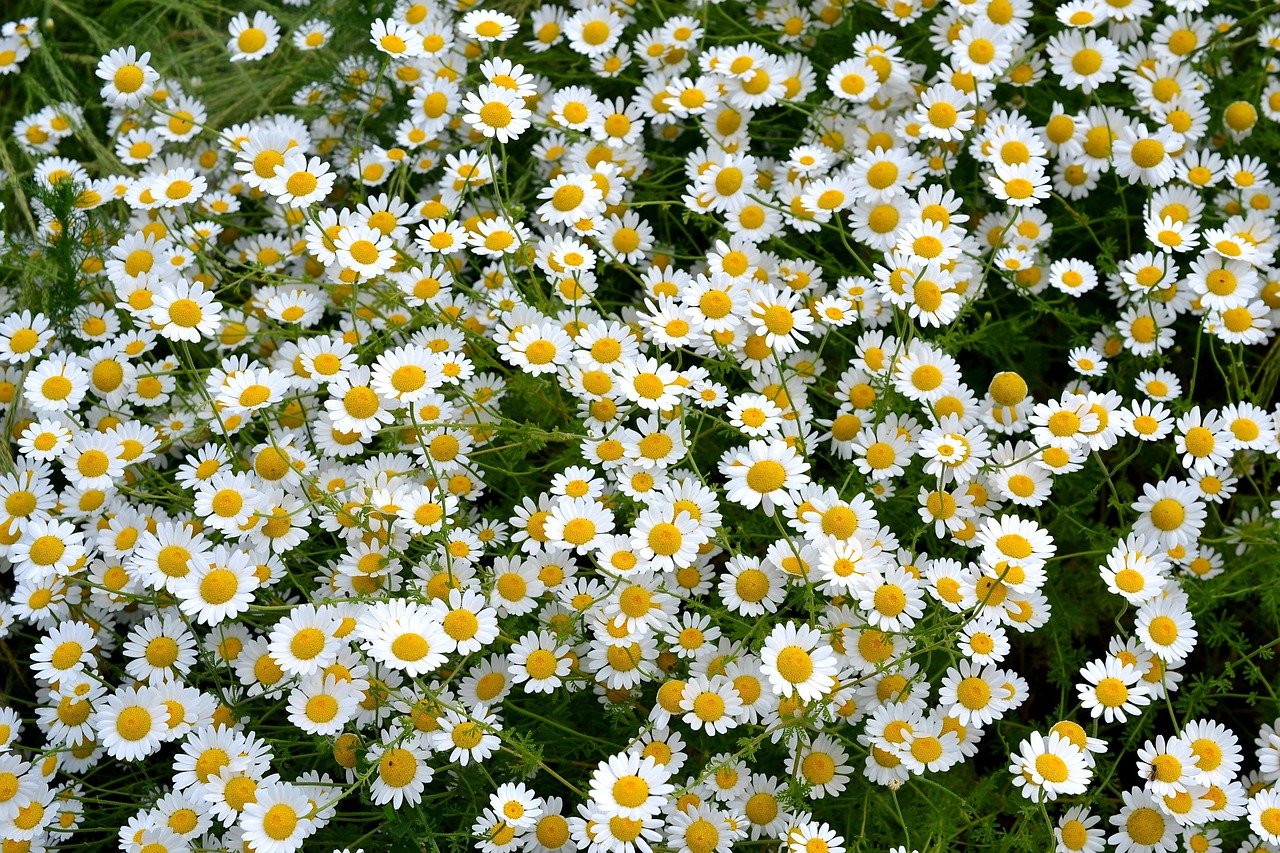
Chamomile (Matricaria chamomilla) is the flowering plant whose dried flower heads go into the cup. Chamomile tea is a herbal tea, meaning an infusion of herbs or flowers rather than the leaves of the tea plant. That is why a bag is described in terms of grams of herb rather than tea leaf.
Readers exploring other plant-based options can continue with what is ashwagandha, a very different herb with its own questions, or compare american ginseng vs asian ginseng. Each deserves the same careful reading of evidence that chamomile does.
Frequently asked questions
Does chamomile tea help with sleep?
Not conclusively. MedicineNet reports that conclusive studies supporting chamomile as a sleep aid are lacking. Many people enjoy a warm cup before bed, but persistent sleep problems warrant medical advice.
How many calories are in a cup of chamomile tea?
About 2 calories per 8-ounce cup when brewed plain, according to a nutrition overview of chamomile tea. Anything added to the cup changes that figure.
Are tea bags as strong as loose flowers?
Generally not. A prepared bag typically contains 1-2 g of herb, while the traditional preparation uses 3 g of flowers, as described in the same nutrition overview. Bags suit a milder cup, and loose flowers suit a stronger one.