For matcha vs green tea, choose matcha if you want a whisked, shade-grown whole-leaf powder with more caffeine, and choose steeped green tea for a lighter cup where the leaves are discarded.
Picture someone standing at a tea shelf with a tin of powder in one hand and a bag of loose leaves in the other, wondering whether they are the same drink. Both come from one plant and sit comfortably within plant based wellness, but the way they are grown, processed and drunk changes what ends up in the cup.
Decision criteria before you compare
Five criteria separate the two drinks, and each one traces back to the field or the factory. Work through them in this order, because the early ones explain the later ones.
- Growing conditions. Check whether the leaf was shaded. Tea destined to become matcha is usually grown in partial shade, according to Three Leaf Tea.
- Leaf processing. Ask whether the leaf is kept as a dried leaf or ground into powder.
- How much leaf you actually drink. Steeping discards the leaf, while whisking suspends all of it in the drink. This drives the differences in caffeine, theanine and catechins.
- Preparation effort. Matcha needs a bowl and whisk. Green tea needs only a pot or cup and a way to remove the leaves.
- Tolerance for caffeine and your health context. A stronger leaf intake deserves more thought if you are caffeine-sensitive or take medicines.
The sections below apply each criterion in turn, then place the results side by side.
Growing: shade versus open field
Matcha and green tea are both made from Camellia sinensis, the tea plant, so the difference begins with cultivation rather than species. Three Leaf Tea states that the tea plants behind matcha are usually grown in partial shade.
What shading changes
The same source explains that shading protects the theanine in the leaves, an amino acid that gives matcha its umami flavour. It also notes that overexposure to sun can turn tea leaves bitter, which is a practical reason to shade leaves destined for a drink that is consumed whole. Shade-grown tea, then, is less about a marketing label and more about steering the leaf toward a savoury, less bitter profile.
Which leaves are picked
Quality is also about selection. The same source says that high-quality green tea and matcha typically use only the tips and the newest three or four leaves on the stem. At the premium end, therefore, the two products start from similar young growth, and the divergence comes from shading and what happens after picking.
Processing: dried leaf or ground powder
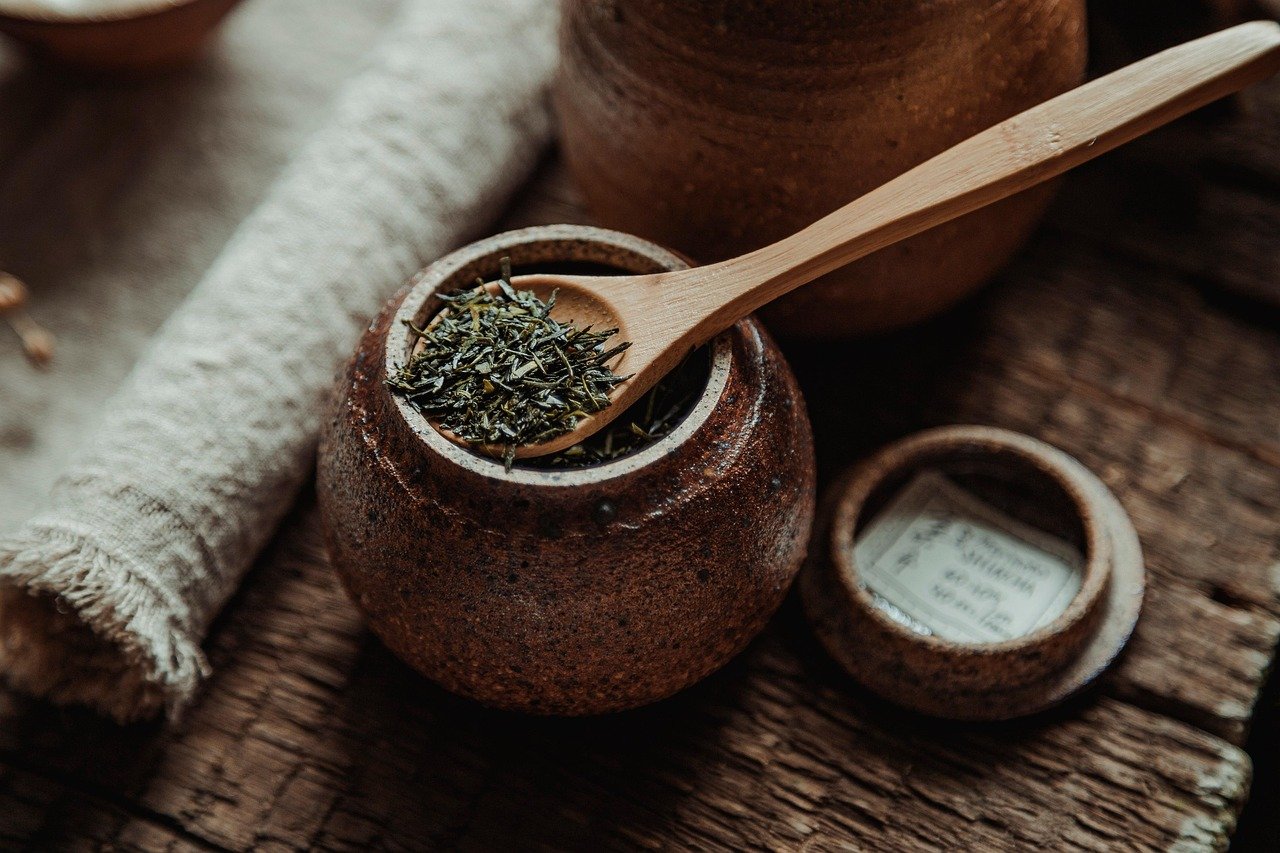
After harvest, green tea leaves are steamed to stop the fermentation process, then dried until they retain only about 5% of their moisture, according to Three Leaf Tea. The result is the familiar loose leaf, which keeps its shape and is meant to be infused.
Leaves that become matcha are destemmed, deveined and then ground into a fine powder. Removing stems and veins is what lets the leaf be consumed whole without grit or fibre, and grinding is what makes whisking possible.
Side-by-side comparison
| Criterion | Matcha | Green tea | Planning use |
|---|---|---|---|
| Plant | Camellia sinensis | Camellia sinensis | Neither is a different plant, so differences come from handling. |
| Growing | Usually partial shade | Not described as shaded in the same way | Shaded leaf suits a savoury, umami-leaning drink. |
| Leaf treatment | Destemmed, deveined, ground to fine powder | Steamed to stop fermentation, dried to about 5% moisture | Powder is whisked; dried leaf is steeped. |
| Leaf consumed | Whole leaf | Infusion only; leaves discarded | Whole-leaf intake raises theanine, catechins and caffeine. |
| Equipment | Bowl, scoop, bamboo whisk | Pot or cup, cold or hot water | Choose green tea if you want minimal kit. |
| Common café use | Base of a “green tea latte” | Plain brewed cup | Order matcha when a milk-based drink is the goal. |
These comparisons draw on the grower and processor descriptions in Three Leaf Tea’s green tea versus matcha guide.
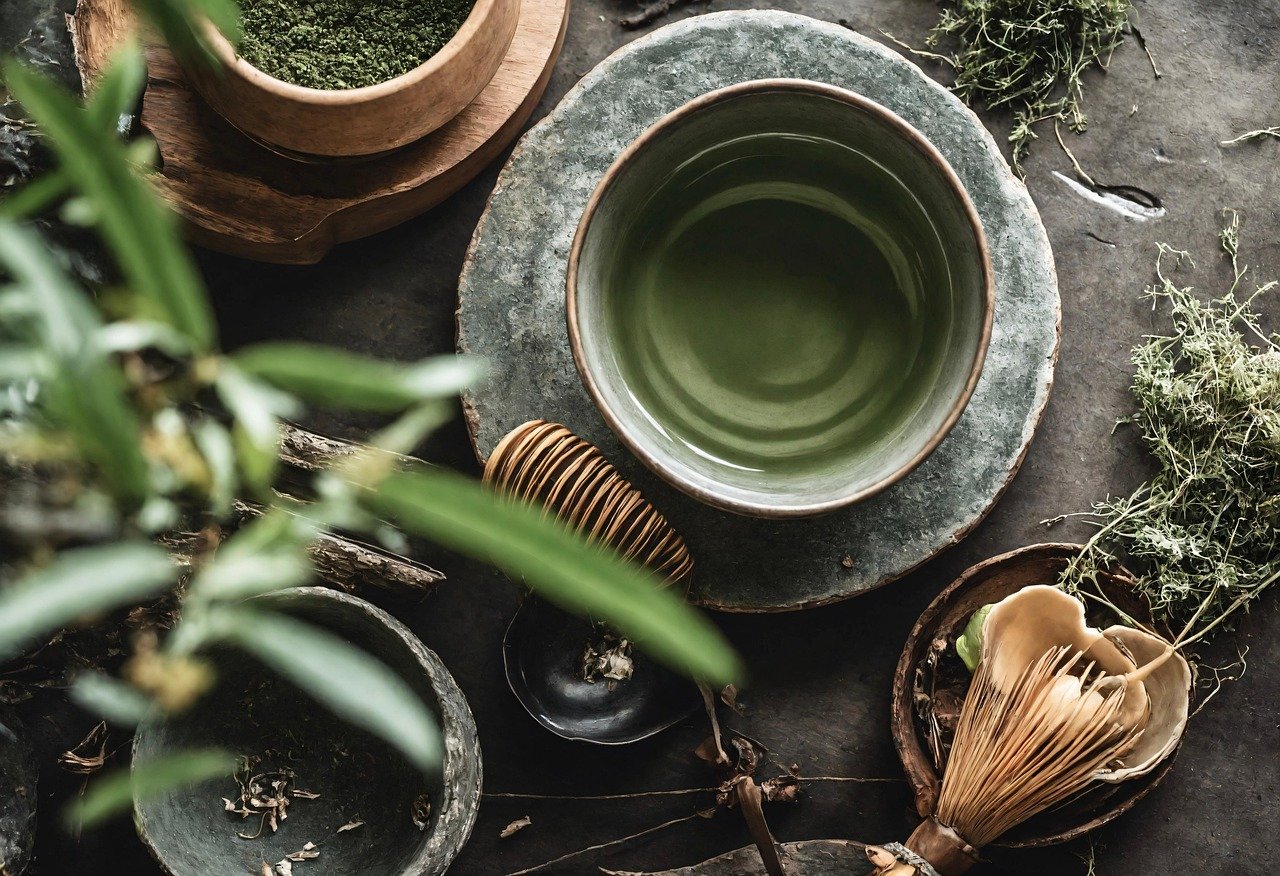
Caffeine, theanine and catechins
Matcha contains more theanine, catechins and caffeine than green tea, because matcha is made using the whole leaf, according to Three Leaf Tea. Green tea is not empty by comparison. The same source notes that it has similar benefits, including L-theanine, which promotes relaxation, along with catechins and some caffeine.
Reading caffeine per serving
The practical point is that the gap comes from consuming the leaf rather than a steeped extract of it. A bowl of matcha therefore delivers more caffeine than a typical steeped cup, and the amount rises with each extra scoop of powder. If caffeine sensitivity is a concern, treat matcha as the stronger option and keep the serving modest. Green tea suits people who want gentler stimulation across several cups.
Is matcha healthier?
Matcha delivers more of the compounds usually discussed in tea, but more is not automatically better. Green tea carries the same families of compounds at lower levels, so a regular green tea habit is a reasonable choice. Pick matcha when you want the concentrated whole-leaf intake and are comfortable with the extra caffeine. Neither drink should be treated as a cure for anything.
On energy content, one ready-to-drink organic matcha product in USDA-based branded data lists 19 kcal per 240 g (8 oz) serving, per MyFoodData. That figure is for a single bottled product, so powder you whisk yourself, or a latte made with milk and sweetener, will differ.
Preparing matcha
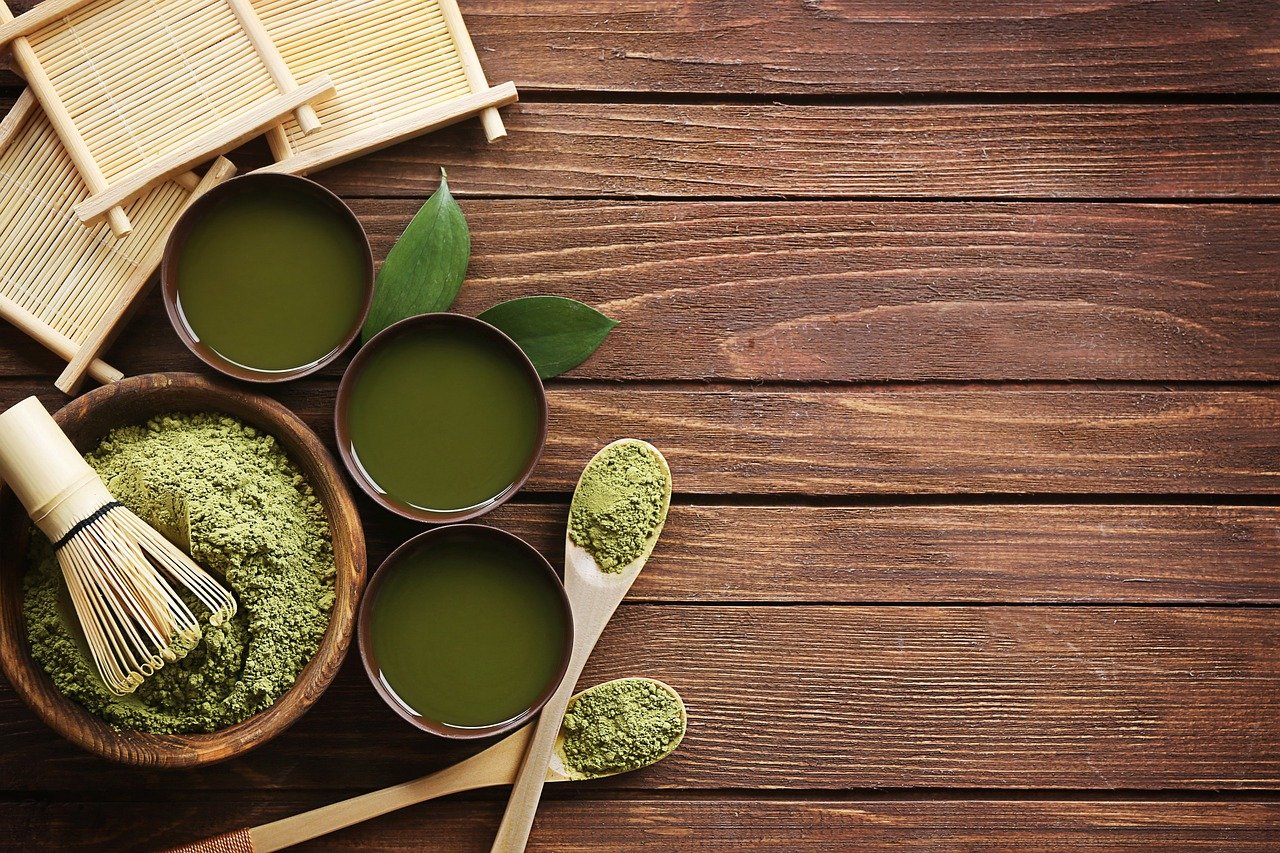
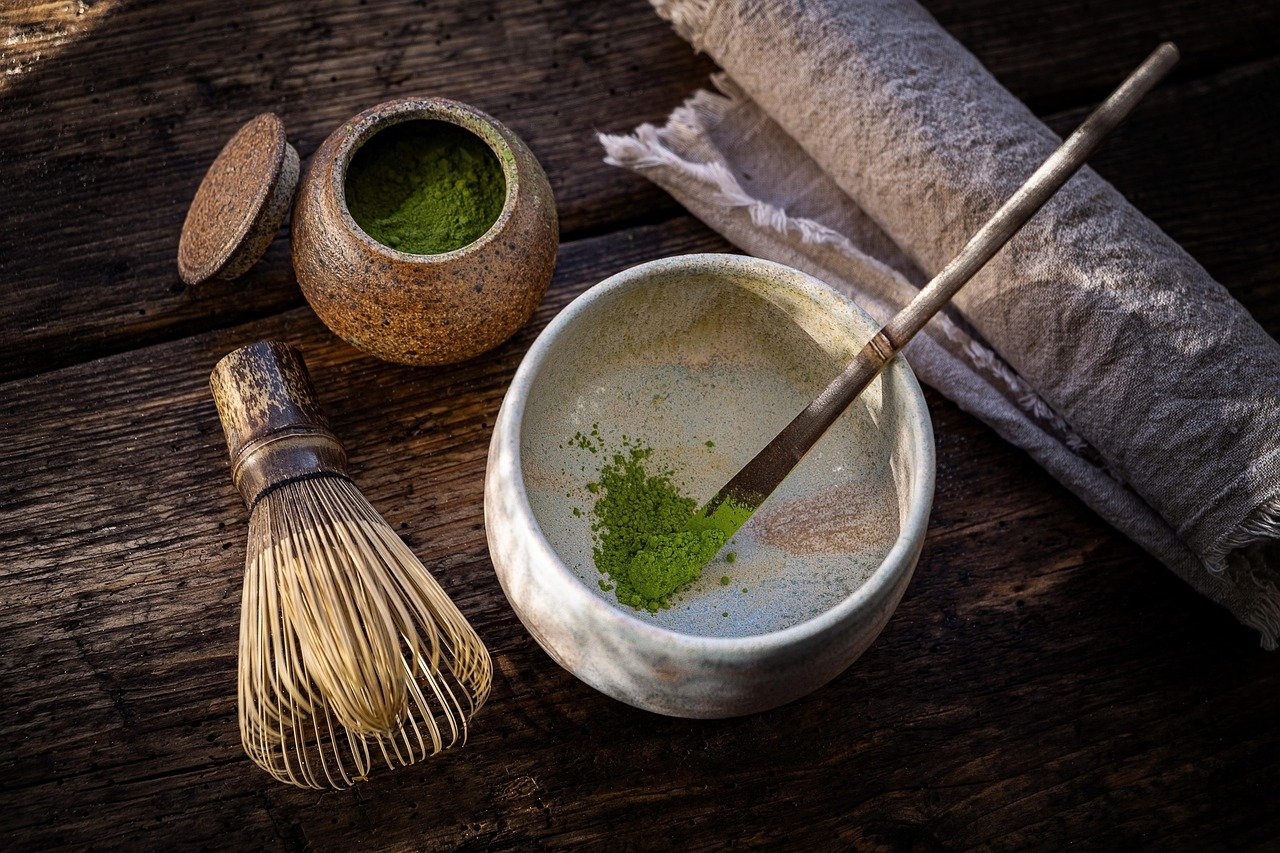
Matcha is prepared by whisking, not steeping, because the powder has to be suspended in water and drunk along with the leaf. The traditional kit is a bowl, a scoop and a bamboo whisk, known as a chasen.
- Sift or scoop the powder into a dry bowl, using the amount recommended on the product you bought.
- Add water at the temperature the product directs. Packaged matcha varies, so the label is the best guide.
- Whisk briskly with the bamboo whisk until the surface turns frothy and no dry clumps remain.
- Drink straight from the bowl, or pour the whisked matcha over milk for a latte.
That last use matters at the café counter, where a “green tea latte” often refers to a latte made using matcha, as Three Leaf Tea points out. Because the leaf stays in the drink, anything left undissolved will settle, so stir or whisk again before the last sips.
Preparing green tea
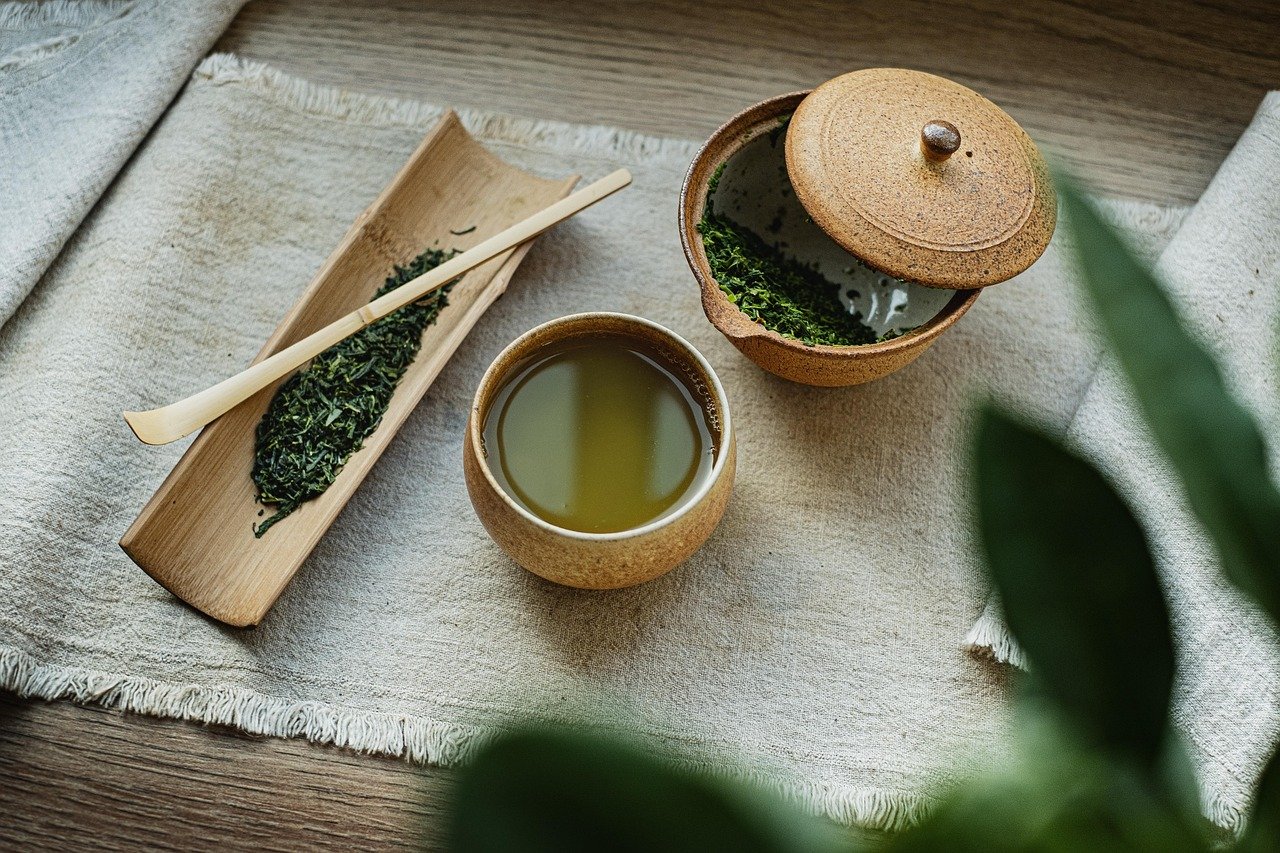
Green tea is prepared by steeping the dried leaves in cold or hot water and then discarding the leaves, as described by Three Leaf Tea. This makes it the lower-effort option: no whisking, no powder to clump, and a clear, pale cup.
Cold steeping is a real alternative to hot water, and it suits anyone who wants iced tea without preparing a hot brew first. Because the leaves are removed, you drink only what the water has extracted, which fits with the lower caffeine and catechin intake compared with whole-leaf matcha.
Safety and high intake
Drinking brewed green tea or whisked matcha is a different matter from taking concentrated extracts, and the safety concerns in the evidence attach mainly to the extracts. Reporting on an Environmental Working Group investigation, published by the Dallas Examiner, says highly concentrated green tea extracts are linked to estrogen disruption and harm to the liver, and that there are at least 100 established cases of severe liver damage in people using concentrated green tea extracts.
Tea versus purified extract
The same article quotes a researcher saying there is a major difference between the antioxidants in green tea made at home and a purified extract. Treat that as a reason to prefer the drink over capsules or powders sold for catechin content. Matcha sits between the two in intensity, since it is whole leaf and carries more caffeine and catechins than steeped tea. A sensible approach is to keep daily servings moderate and avoid stacking matcha with extract supplements.
Medicines and herbal products
The article also quotes the US National Library of Medicine, noting that herbal medicines do not have to go through the testing that drugs do, and that some herbs can interact with prescription or over-the-counter medicines. If you take regular medication, check with a pharmacist or doctor before making matcha or any tea extract a daily habit. The same caution applies to other botanicals, such as the one covered in what is echinacea used for.
Who should choose which
- Choose matcha if you enjoy a savoury, umami-leaning flavour, want a latte base, and are comfortable with higher caffeine from drinking the whole leaf.
- Choose green tea if you want a light daily drink, prefer cold or hot infusion, or want minimal equipment and lower caffeine per cup.
- Wait or switch if you take medicines, are sensitive to caffeine, or are considering concentrated extracts. Brewed tea is the lower-intensity starting point.
Both are the same plant, so neither choice is wrong. The decision comes down to how you want to prepare it and how much of the leaf you want in the cup.
Frequently asked questions
| Question | Answer |
|---|---|
| Can green tea be used instead of matcha in a latte? | Not as a like-for-like swap. A café “green tea latte” usually means matcha, which is a whisked powder, whereas steeped green tea is a thin infusion. |
| Does the shade make matcha taste different? | Yes. Shading protects theanine, the amino acid linked to matcha’s umami flavour, and it helps avoid the bitterness that overexposure to sun can cause. |
| Are green tea extract supplements the same as drinking tea? | No. Reporting on the Environmental Working Group investigation distinguishes home-brewed tea from purified extracts, and the liver-harm cases it cites involve concentrated extracts. |
| How many calories are in bottled matcha? | One ready-to-drink organic matcha product lists 19 kcal per 240 g serving. Other products and homemade lattes will vary. |