
A farmer sees the diesel bill jump and wonders why a barrel of crude oil matters. Crude oil is unrefined petroleum, and refineries split it into fuels such as diesel, so its price feeds into farm fuel costs, though not mechanically.
Anyone budgeting field work, including industrial hemp farming, buys diesel indirectly from this commodity. The sections below correct the most common misunderstandings, then connect them to what a farm pays.
Crude oil in plain terms
Crude oil is a raw mixture of hydrocarbon molecules of different sizes, not a finished fuel. Molecules of similar size have similar boiling points, which is what allows a refinery to sort them into groups called fractions, according to BBC Bitesize. Most confusion about oil comes from treating the raw liquid and the pump fuel as the same thing.

| Common belief | What is supported | Planning use |
|---|---|---|
| Crude oil is the fuel that goes in a tractor. | Crude oil is a mixture. Its hydrocarbons are separated into fractions that become different products. | Treat crude as a raw input to diesel, not as the price a farm pays. |
| Refining is a simple filtering step. | Fractional distillation separates the mixture into components that condense at different temperatures. | Refinery capacity and operations sit between the crude price and the diesel price. |
| Every part of crude oil becomes liquid fuel. | The shortest hydrocarbons have very low boiling points and leave the column as gas. The longest leave as a hot liquid called bitumen. | Only the middle of the range supplies liquid fuels, so product supply can differ from crude supply. |
| All crude oil is the same. | Fractions differ by molecule size and boiling point, and benchmark crudes are quoted separately. | Check which benchmark a price headline is quoting. |
The separation process and the behaviour of the lightest and heaviest fractions are described by BBC Bitesize.
Extraction and transport
Crude oil starts underground and reaches the surface through a well. On many onshore fields the visible equipment is a pumpjack, whose walking beam and counterweight drive a pump at the wellhead. A valve assembly beside the pump controls the flow.
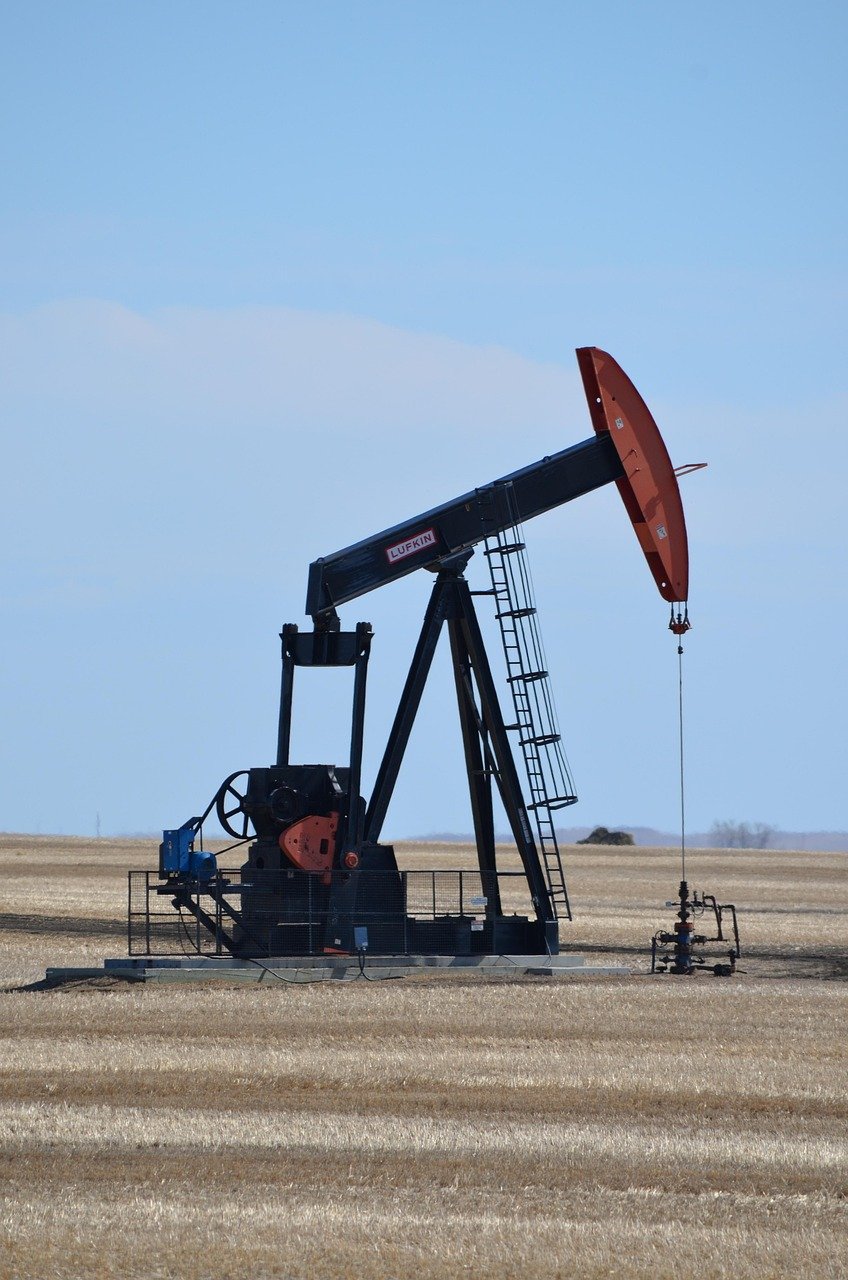
Once produced, crude oil is gathered and sent on to storage tanks and refineries, typically by pipeline. This stage is easy to overlook, but it is why crude oil is stored in large volumes before refining. Storage levels are reported weekly, which is where the inventory figures in later sections come from.
Refining into fuels
An oil refinery turns crude oil into fuels by fractional distillation. In this process a mixture such as crude oil is separated into components that condense at different temperatures, as BBC Bitesize explains.
What leaves the column, and where
The sorting works by boiling point. The lightest fractions never condense and leave the top of the column as gas. The heaviest fractions leave as a hot liquid called bitumen. Liquid fuels come from the range between those extremes.
Diesel fuel is one of those liquid products. In US inventory reporting it belongs to the distillate category, so distillate stock figures are the closest weekly signal for diesel supply.
Why refined products are not crude
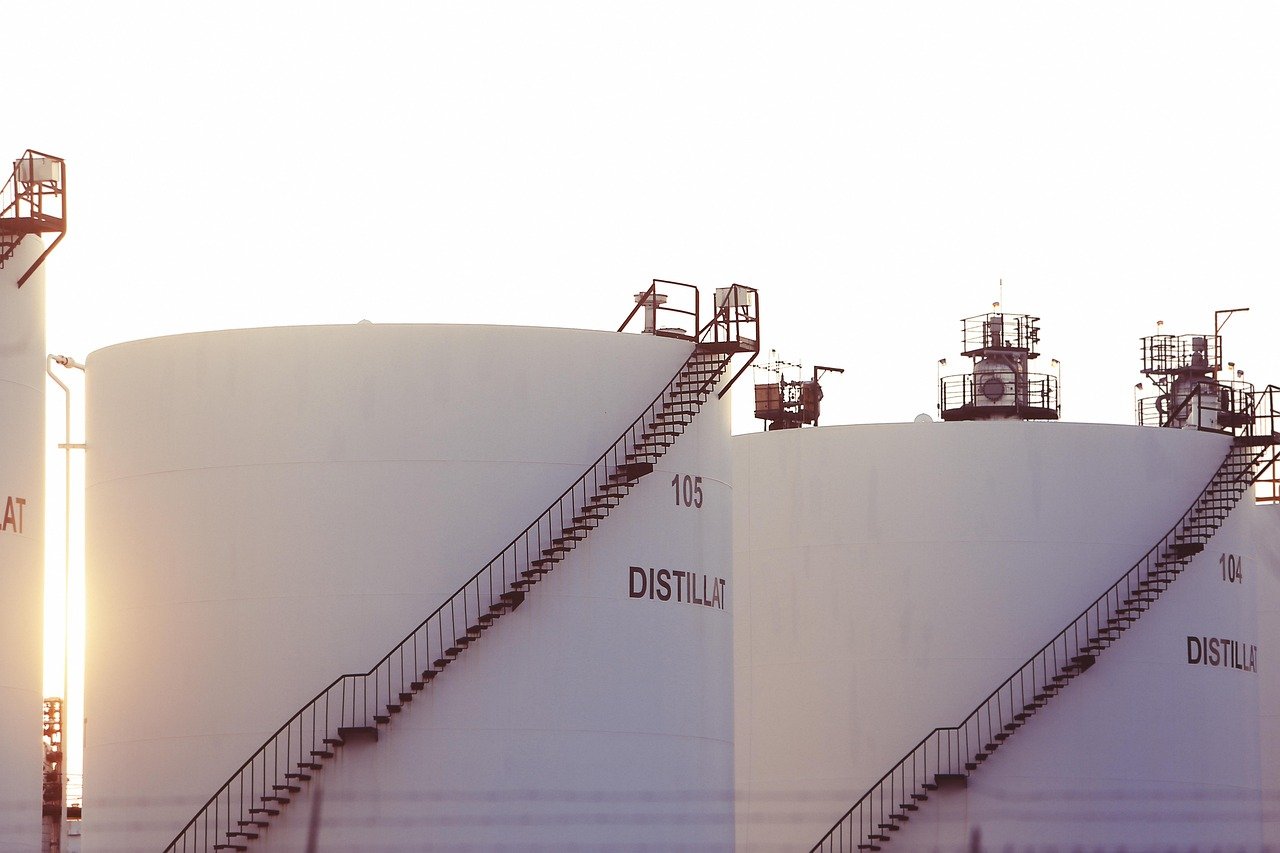
Refined products are stored and tracked separately from crude. Tanks like the ones below hold finished product, and their inventory levels can tighten even when crude is plentiful.
Benchmark crudes and the barrel
A barrel of oil is the unit in which crude oil is priced. Market reports quote West Texas Intermediate (WTI) and Brent crude side by side, and the two prices differ on the same morning. The figures below are a snapshot from July 8, 2026, not a standing relationship.
| Benchmark | Quoted price | Planning use |
|---|---|---|
| Brent crude | $77.37 per barrel (Brent futures, 8:45 a.m. New York, July 8, 2026) | Use as the reference when a headline cites Brent, and keep the date in mind. |
| West Texas Intermediate | $73.41 per barrel (Wednesday morning, July 8, 2026) | Use as the reference when a headline cites WTI, and do not mix it with Brent figures. |
Both quotes come from a market report on weekly US crude inventories.
The practical lesson is to compare like with like. A farm manager reading that oil is up or down should check which benchmark was quoted and at what time. Both prices describe crude, not the diesel delivered to a farm tank.
Farm diesel and fertilizer costs
Diesel is the most direct link between crude oil and a farm budget. Farm diesel in Illinois averaged a record $5.41 per gallon at the beginning of May 2026, nearly double the price a year earlier, according to AgroLatam. That is one state’s average at one moment, so it shows the scale of a price swing rather than a national price.

Watch products, not only crude
Distillate inventories, the category that includes diesel, stood 12% below the five-year average in the early July 2026 weekly report, according to the crude inventory coverage. Low product stocks are a reason for a diesel buyer to pay attention, even when a crude headline looks calm.
Fertilizer is a separate line
Fertilizer is another input that farmers often associate with oil prices. Its price should be checked as its own quote rather than inferred from a crude benchmark. Ask suppliers for current quotes and treat any link to crude oil as something to confirm, not assume.
Reading price news as a farm buyer
- Match the benchmark to the claim. Brent and WTI are quoted at different levels, so a change reported in one does not describe the other.
- Check distillate before fuel contracts. A buyer who needs diesel for a busy field season gains more from distillate stock reports than from crude headlines alone.
- Use local prices for budgets. A regional farm diesel average, such as the Illinois figure, is closer to a farm invoice than a barrel price.
- Treat single readings as snapshots. A morning futures quote or a weekly stock report records one moment and does not forecast next month.
Frequently asked questions
| Question | Answer |
|---|---|
| How much crude oil do US commercial stocks hold? | Commercial US crude oil stocks reached 411.4 million barrels in the week ending July 3, about 6% below the five-year average, according to weekly inventory coverage. |
| What does “products supplied” tell a reader about oil demand? | Total US products supplied is a proxy for oil demand. It averaged 20.6 million barrels per day over the four weeks covered by the same inventory report. |
| How far can benchmark prices move in one morning? | On the Wednesday morning cited above, WTI was up $2.97 per barrel (+4.22%) at $73.41, which shows why a single quote is a snapshot rather than a trend. |