Is hemp farming profitable? Figures come from Purdue Extension’s guidance on enterprise budgets and crop breakeven prices and an industry analysis of corn versus hemp fiber economics.
A preliminary 2020 Michigan fiber budget showed about $190 per acre above total costs, but those figures are region-specific and may vary by area and market.
Crop choice, agronomy and sales channels sit in the wider guide to industrial hemp farming. This page stays with the per-acre arithmetic, laid out in the order a season unfolds.
Before planting: build the enterprise budget
Purdue Extension describes enterprise budgets as estimates of potential revenue, expenses, and earnings or losses for a specific enterprise. A hemp crop budget works the same way. Fiber, grain and CBD biomass are separate enterprises with different buyers, so each needs its own budget rather than one blended average.

- Choose one enterprise. Decide whether the budget covers fiber, grain or CBD biomass, and keep the others out of it.
- Set revenue from a quoted price. Purdue’s Indiana corn budget multiplies trend yield by the expected harvest price to reach a market revenue of $629 per acre. Use a written buyer quote and a yield you can defend for hemp.
- Add variable costs line by line. For hemp, that means seed, labor, testing and drying where they apply, each priced from a supplier, lab or contractor quote.
- Add overhead. Machinery ownership, land and management belong in the budget even when no cash leaves the account this season.
- Calculate breakeven and stress it. Move yield, price and cost up and down before committing acres.
With the sheet built, the next job is to see where cost per acre actually accumulates once the crop is in the ground.
Growing season: where cost per acre builds up
Cost per acre is the sum of variable inputs and overhead, and the benchmark budgets show how much both matter. Purdue’s Indiana 2017 corn budget put total variable cost at $422 per acre, or $2.48 per bushel, while the soybean budget’s variable cost was $232 per acre. A lower variable cost did not make soybeans safe, because the soybean breakeven was still far above what the expected price covered.
Costs that shift from year to year
An Illinois corn analysis reports non-land costs rising to a record $857 per acre in 2023, then projected to ease to $808 per acre for 2024. Hemp budgets face the same movement in seed, labor and drying costs. Borrowing last year’s figure, or another region’s, is a common way to make a budget look better than the season turns out.
Hemp-specific lines to price yourself
- Seed. Take quotes for the variety and the planting rate you intend to use, because grain and fiber crops are managed differently.
- Labor. Include hired and family labor at a realistic rate, since unpaid hours still count as an economic cost.
- Testing. Add lab fees for any required sampling or compliance testing as a line of its own.
- Drying. Enter drying and storage as a cost for any crop that must be dried before sale, and leave it out only where the buyer takes the crop as harvested.
Once costs are fixed, revenue becomes the deciding line, and it differs sharply among the three hemp enterprises.
Harvest and sale: fiber, grain and CBD biomass
Profit differs among fiber, grain and CBD hemp mainly because each sells to a different buyer on a different unit price. Prices for grain, fiber and CBD biomass vary by buyer, region and season, so the dependable method is to enter a written quote and test the budget against its breakeven. Whether the quote is per pound or per bushel, convert it to revenue per acre using a yield you can defend.
Fiber
Fiber is the enterprise with a published hemp budget in this evidence. The preliminary 2020 Michigan figures in the table above showed a positive return above total costs, but the analysis itself cautions that the figures are region-specific and may change under other market conditions. That suits a farm with a nearby fiber buyer and a known baling arrangement, and it suits others less.
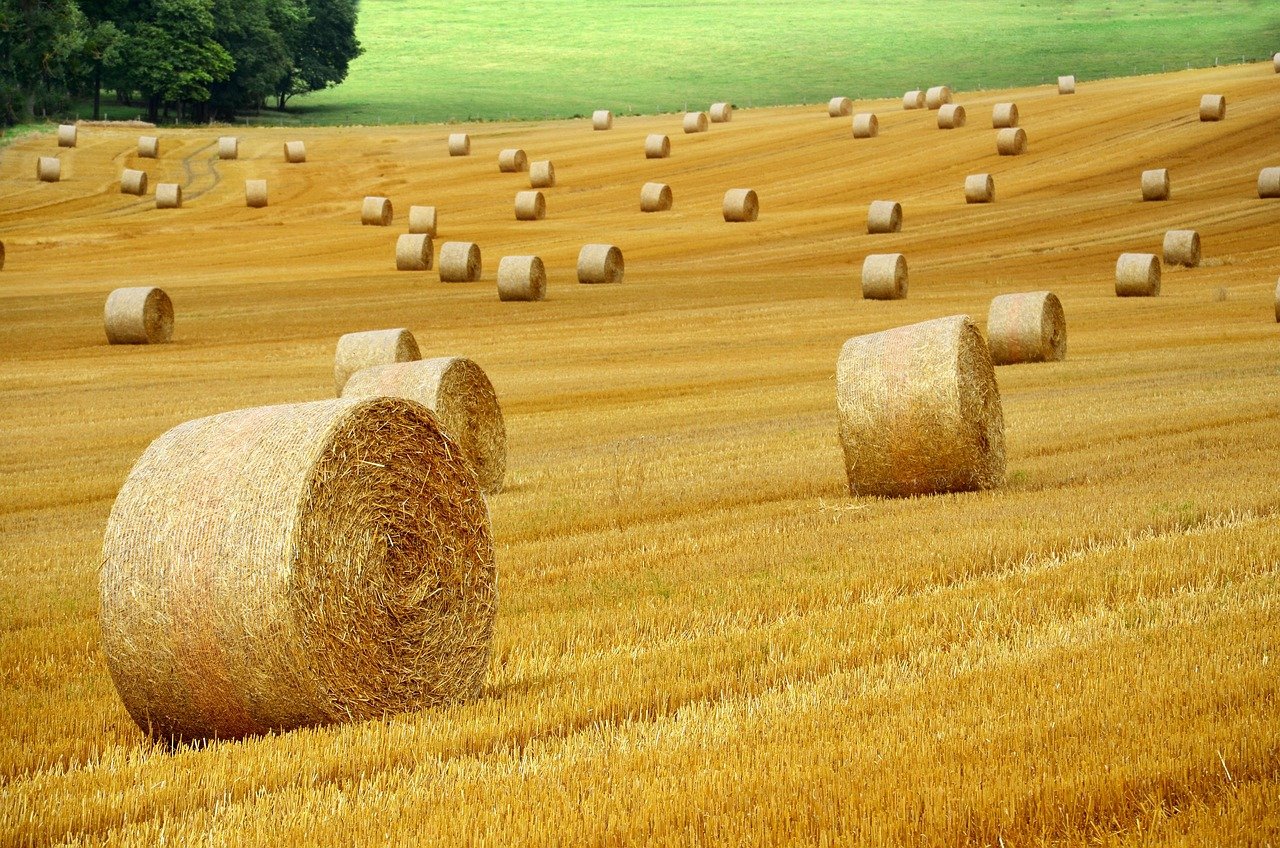
Harvest and baling choices change the cost side of a fiber budget, so read the guide to hemp harvesting equipment before fixing that line.
Grain
Hemp grain is sold as a commodity, so the useful comparison is the buyer’s price against your breakeven per unit. Purdue’s soybean example shows the risk: a market revenue of $458 per acre against a breakeven of $10.92 per bushel left an expected loss of $110 per acre. A hemp grain price has to clear its own breakeven in the same way, and it should be tested at a lower yield as well as the expected one.
CBD biomass
CBD biomass carries the heaviest list of cost-bearing steps in this comparison: testing and drying sit on top of growing costs, and each needs its own budget line. Its revenue rests entirely on the contracted biomass price, so a farm without a signed buyer has no basis for a revenue figure. Fiber and grain budgets should not be borrowed for it.
Risks that can erase profit
Profit disappears when price, yield or cost moves against the budget, and Purdue notes the breakeven price is sensitive to changes in yields, prices and cost estimates. The same budget shows how large the swings can be.
- Land productivity. Purdue’s corn breakeven was $4.46 per bushel overall, but $4.94 on low-productivity land and $4.05 on high-productivity land.
- A cost change helps, but it will not rescue a price far below breakeven.
- Price below breakeven. In the Illinois analysis, corn at a current price of $4.47 per bushel sat below projected 2024 breakevens above $5.00 per bushel in all regions, and returns ranged from -$81 to -$113 per acre.
- Unreliable local figures. A budget built on another region’s published numbers can look sound and still miss your area’s prices and costs.
Yield loss and price swings are the exposures most farms try to cover, and the options are laid out in the guide to hemp crop insurance.
Deciding whether to plant
Plant only when the budget clears breakeven with room for a poorer yield or a lower price. The fiber case supports cautious optimism where a local buyer and a tested budget exist. The corn and soybean examples show that positive revenue is not profit, and that a fall in price or rise in cost can turn a plan negative.
Wait if no buyer has quoted a price, because any revenue line is then a guess. Start with a small area if the budget works only at the best yield. A budget that fails at a modest downside should be reworked or dropped before seed is bought.
Frequently asked questions
Can a farm keep growing a crop that does not cover every cost?
For a time, yes. Purdue’s budget guidance says that in the short run a farm should continue to produce if it covers variable costs, but in the long run all variable and overhead costs must be covered (Purdue Extension).
Why do enterprise budgets use economic costs instead of cash costs?
Most enterprise budgets include opportunity costs as well as cash outlays, so a crop is judged against what the land and resources could otherwise earn, not just what leaves the bank account.
How big a share of cost is overhead?
It can be the larger share. In Purdue’s Indiana budgets, overhead was 59% of total cost for soybeans and 44% for corn, which is why leaving it out flatters a budget (Purdue Extension).
Do the corn and soybean figures describe hemp prices?
No.