How is water used in Colorado agriculture? Mostly for irrigation: mountain snowmelt feeds the rivers, farms divert it, and Colorado State University reports that around 85% of diversions in Colorado go to agriculture.
This guide follows the physical path of that water from snowpack to crop. The wider picture of colorado agriculture sits in the overview, and the choice of irrigation method matters most once the supply is understood.
The path from snowpack to field
Farm water in Colorado starts as mountain snow and ends as water applied to a crop, with reuse along the way. The sequence below shows where each stage sits.
- Snow accumulates in the mountains. Colorado State University notes that the mountains receive the most precipitation in the state in the form of snow, so the high country is the starting point for most farm supply.
- Melt feeds the major river systems. The same source describes the mountains as the origination point for four major river systems: the Colorado, Rio Grande, Arkansas and Platte.
- Farms divert water from the rivers. Diversion is the step that moves water from a river channel toward fields, and agriculture takes the largest share of it.
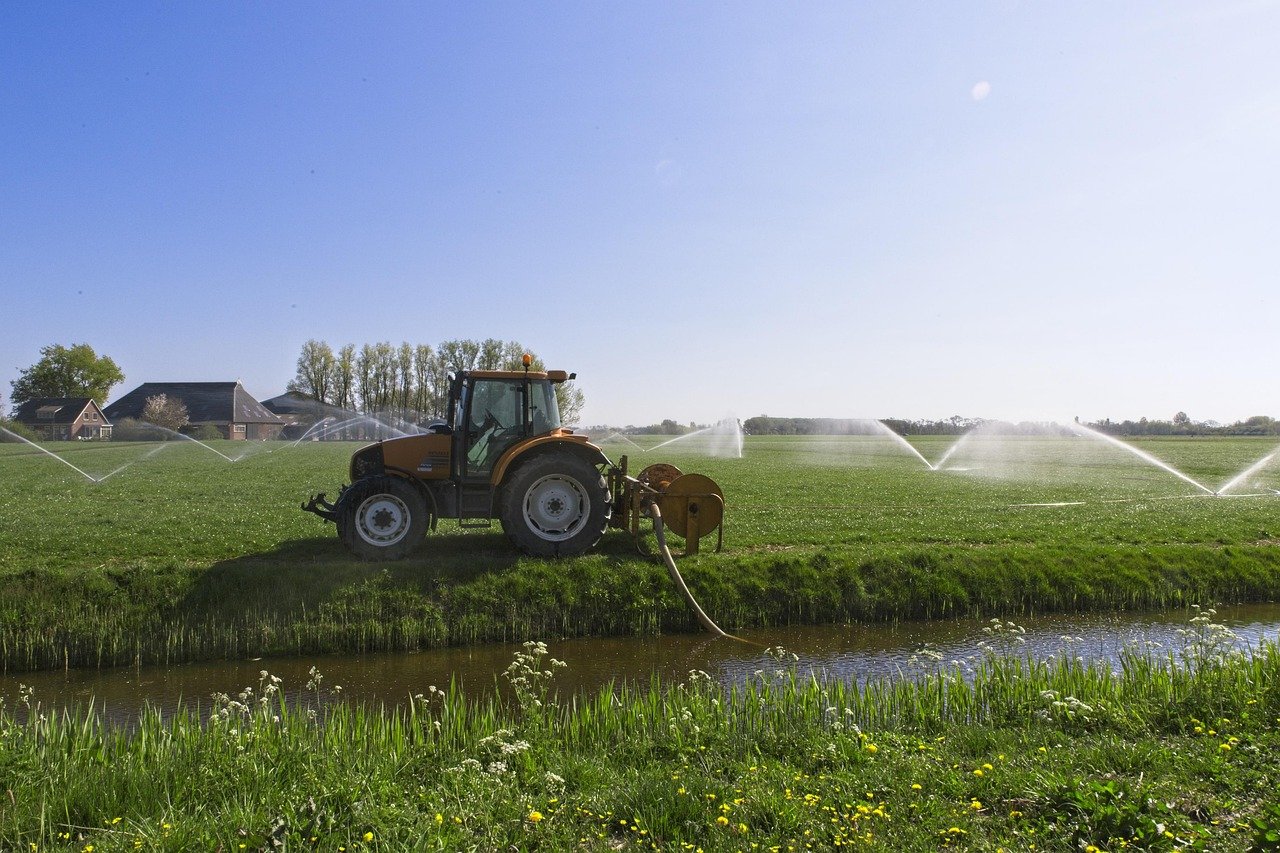
- Water is applied by flood, sprinkler or drip. The method decides how much of the diverted water the crop can use, as covered in the methods section below.
- Unused water returns and is used again. Return flows from agriculture are often a critical part of the water rights system in Colorado, so water leaving one field frequently becomes someone else’s supply.
Because supply depends on snow that falls in a different place from where it is used, the rivers carrying it matter as much as the fields receiving it.
Rivers and basins that supply irrigation
Irrigation water comes from four river systems that begin in Colorado’s mountains: the Colorado, Rio Grande, Arkansas and Platte. Two of them, the South Platte River and the Arkansas River, are the ones most often tied to eastern Colorado farmland.
South Platte River
The South Platte basin shows how intensively a single river can be worked. Colorado State University states that in the South Platte River Basin the same water is used seven times before it leaves the state. For a farm in this basin, that means supply is shaped by upstream users and by what downstream users can pick up again.
Arkansas River
The Arkansas River is the second named basin among the four major systems that originate in the mountains. Farms along it draw on the same snowmelt logic as the South Platte, with supply set by the mountain snowpack upstream.
Colorado River Basin
The Colorado River Basin also reaches the Front Range. About 50% of the water used in Metro Denver and the northern Front Range comes from the Colorado River Basin, according to the same Colorado State University overview. The practical point is that supply in the northern Front Range is not limited to the river running past a given field.
What the agricultural share of diversions means
Agriculture is the dominant user of diverted water in Colorado, which is why farm practice has an outsized effect on how rivers behave. That share counts water taken out of river channels, not water that disappears afterwards.
Return flows are the reason the distinction matters. Colorado State University describes return flows from agriculture as often a critical part of the water rights system in Colorado. When one field is irrigated, part of that water can re-enter a river and supply a user further down, which is how a basin such as the South Platte reuses the same water repeatedly. How those downstream claims are ranked and protected is a legal question, covered in the guide to colorado water rights for farmers.
The takeaway for anyone judging a single irrigation change is that per-field savings and basin-wide effects are not the same thing, because a basin that reuses water is counting on some of what farms do not consume.
Irrigation methods used on Colorado farms
Colorado farmers irrigate by flood, sprinkler (including center-pivot systems) and drip. The figures below come from northeastern Colorado and a northern Colorado vegetable study, so they illustrate direction of change more than a statewide split.
| Method | Reported figure and condition | Planning use |
|---|---|---|
| Flood | Cited as 60% efficient, versus 85% for sprinkler | Baseline that many northeastern acres have moved away from |
| Sprinkler, including center pivot | More than 16% of wetted acres in Northern Water’s service area in 1987; more than 50% of irrigated acres in 2015 | Shows the direction of change on larger field crops in the northeast |
| Drip | No statistical difference in water applied compared with sprinkler on mixed vegetable farms | Choose on factors other than water volume for small vegetable fields |
The efficiency and acreage figures are from a Water Education Colorado letter to the editor, and the drip comparison is from a Colorado State University Extension benchmarking study.
Flood irrigation
Flood irrigation spreads water across the surface of a field, and the letter cites it as 60% efficient. It remains the older, lower-efficiency baseline in the comparison, and its return flows are part of why downstream users have come to rely on it. A farm weighing a change away from flood should therefore consider the downstream water picture as well as its own savings.
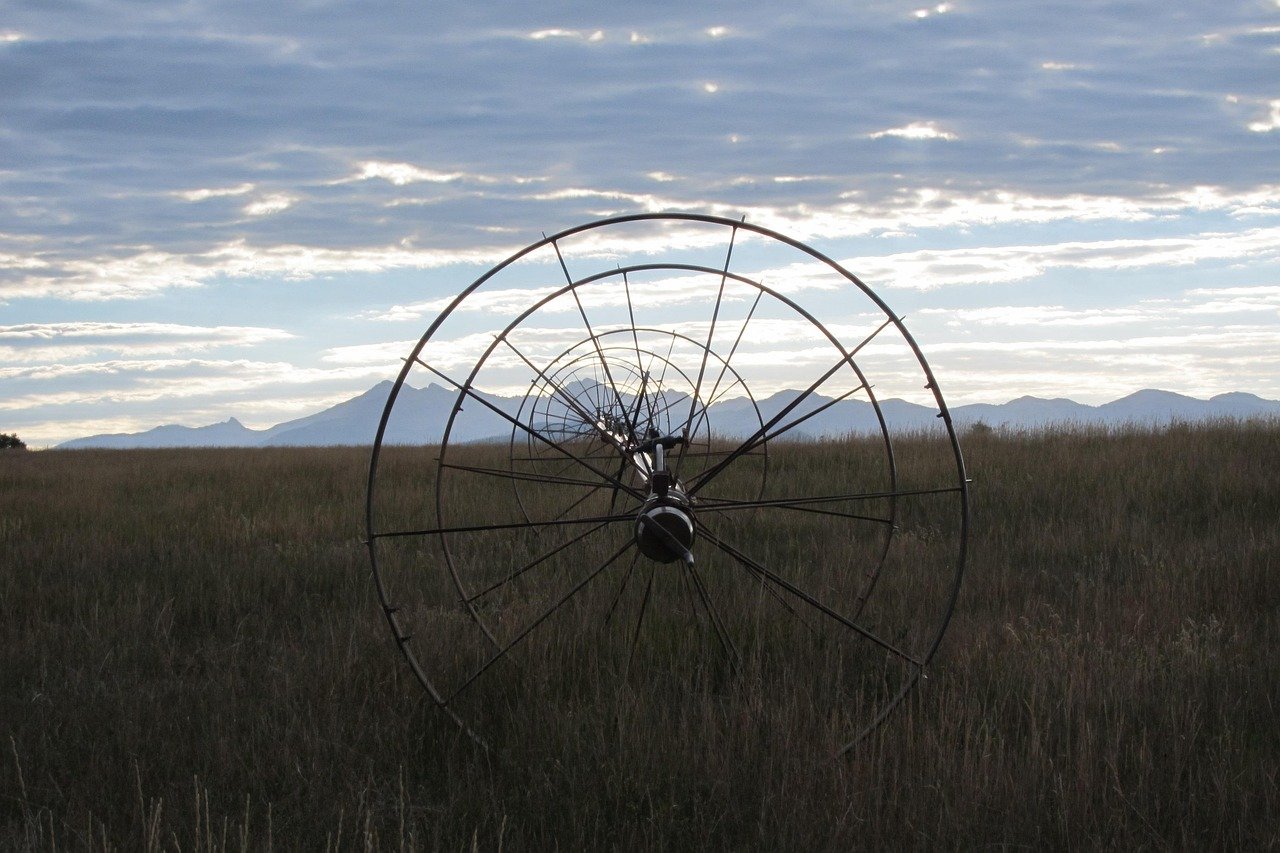
Sprinkler and center-pivot irrigation
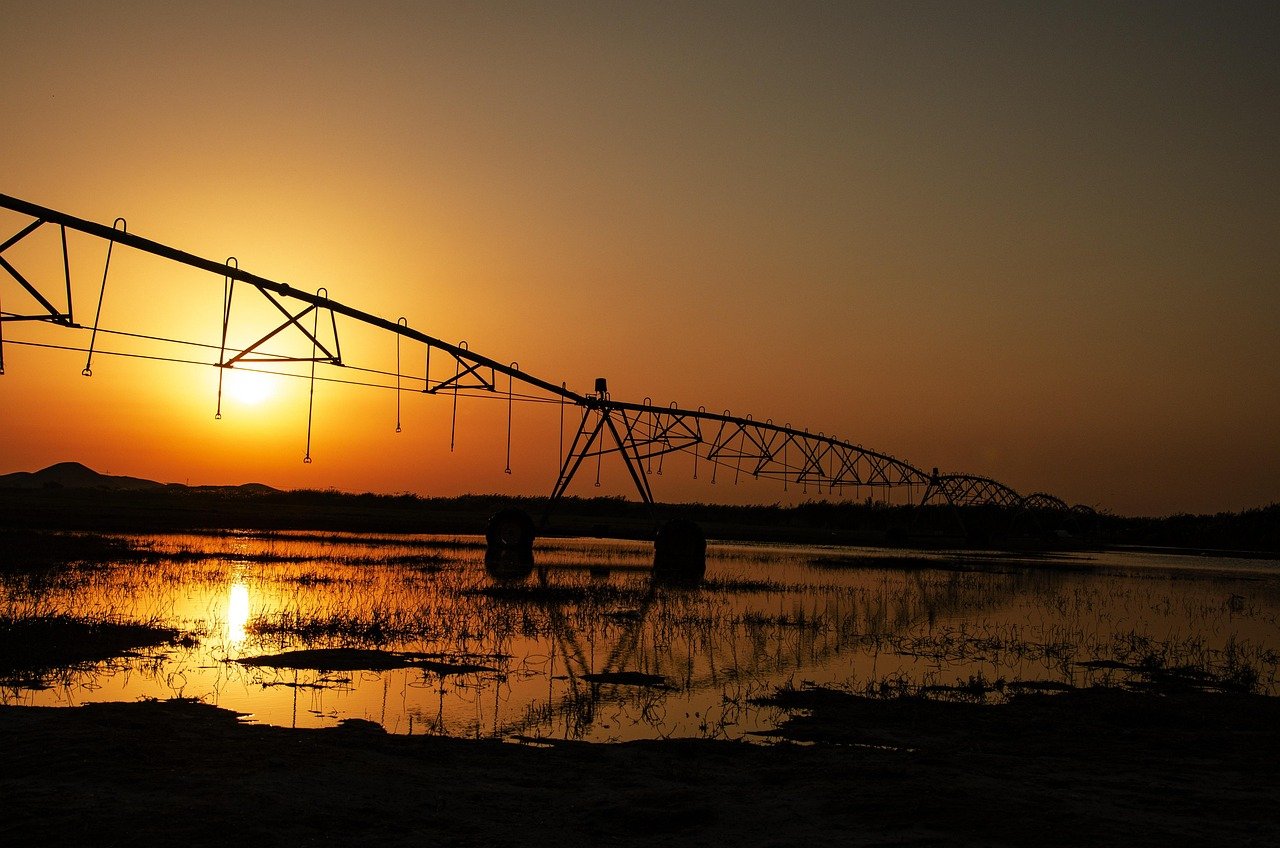
Sprinklers have taken over a large share of irrigated ground in the Northern Water service area, rising from more than 16% of wetted acres in 1987 to more than 50% of irrigated acres in 2015. The letter cites sprinkler irrigation as 85% efficient and frames the shift from flood as a gain in how much applied water reaches the crop. Center pivots, the circular machines most associated with eastern Colorado field crops, suit large fields where one machine can cover a whole area. The efficiency figure is the letter’s cited value, not a guaranteed result on every farm.
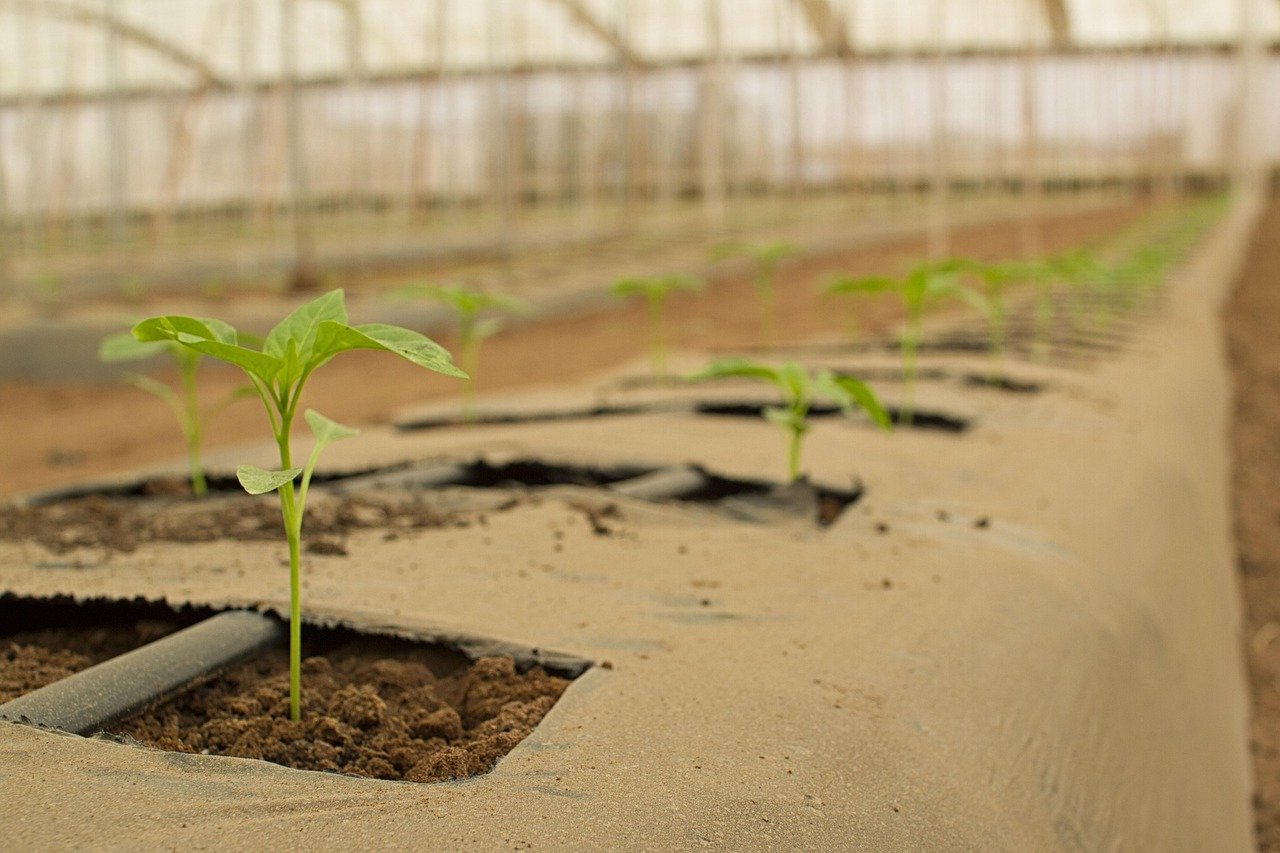
Drip irrigation
Drip suits small, high-value plantings, but it is not automatically the lowest-volume choice. In the Colorado State University Extension study of mixed vegetable farms in northern Colorado, there was no statistical difference between sprinkler or drip irrigation in the water applied. Growers choosing between them on such farms should decide on layout, crop and management rather than expecting drip alone to cut applied water.
Irrigated acreage and how much water fields receive
Irrigated acreage is best read district by district. Northern Water, a northeastern Colorado supplier, serves 640,000 acres of irrigated farmland in northeastern Colorado. That single district gives a sense of scale for the Front Range and northeastern plains. For a statewide total of irrigated acres, the USDA Census of Agriculture irrigation tables are the place to check, because one district covers only part of the state.
At the small-farm end, the Colorado State University Extension benchmarking study measured mixed vegetable fields ranging from 1.4 to 20.8 acres irrigated over the irrigation season. On these farms, applied irrigation averaged 21.5 inches per acre and ranged from 11.3 to 24.2 inches per acre. At 21.5 inches, the study converts that to 583,811 gallons per acre.
The spread between 11.3 and 24.2 inches is the useful number for planning. It shows that farms growing similar crops in the same region applied very different depths, so a grower’s own record is a better guide than a regional average. The length of the crop calendar also shapes how long that water is needed, which is covered in the guide to colorado growing season length.
Frequently asked questions
How many gallons are in an acre-foot of irrigation water?
The Colorado State University Extension benchmarking study uses 325,851 gallons per acre-foot and 27,154.25 gallons per acre-inch for its conversions.
How much flood irrigation has been converted to sprinkler?
The Water Education Colorado letter cites a conversion of 192,000 acres from flood to sprinkler irrigation in northeastern Colorado since 1987.
What does a center-pivot system cost to install?
The same letter uses a present-day capital cost of $700 per acre to install a center-pivot irrigation system. That figure covers installation only, so a farm weighing the investment should set it against its own field size and crop.
Is the same water really reused on Colorado farms?
In the South Platte River Basin, Colorado State University states that the same water is used seven times before it leaves the state, and return flows from agriculture are often critical to the water rights system.